
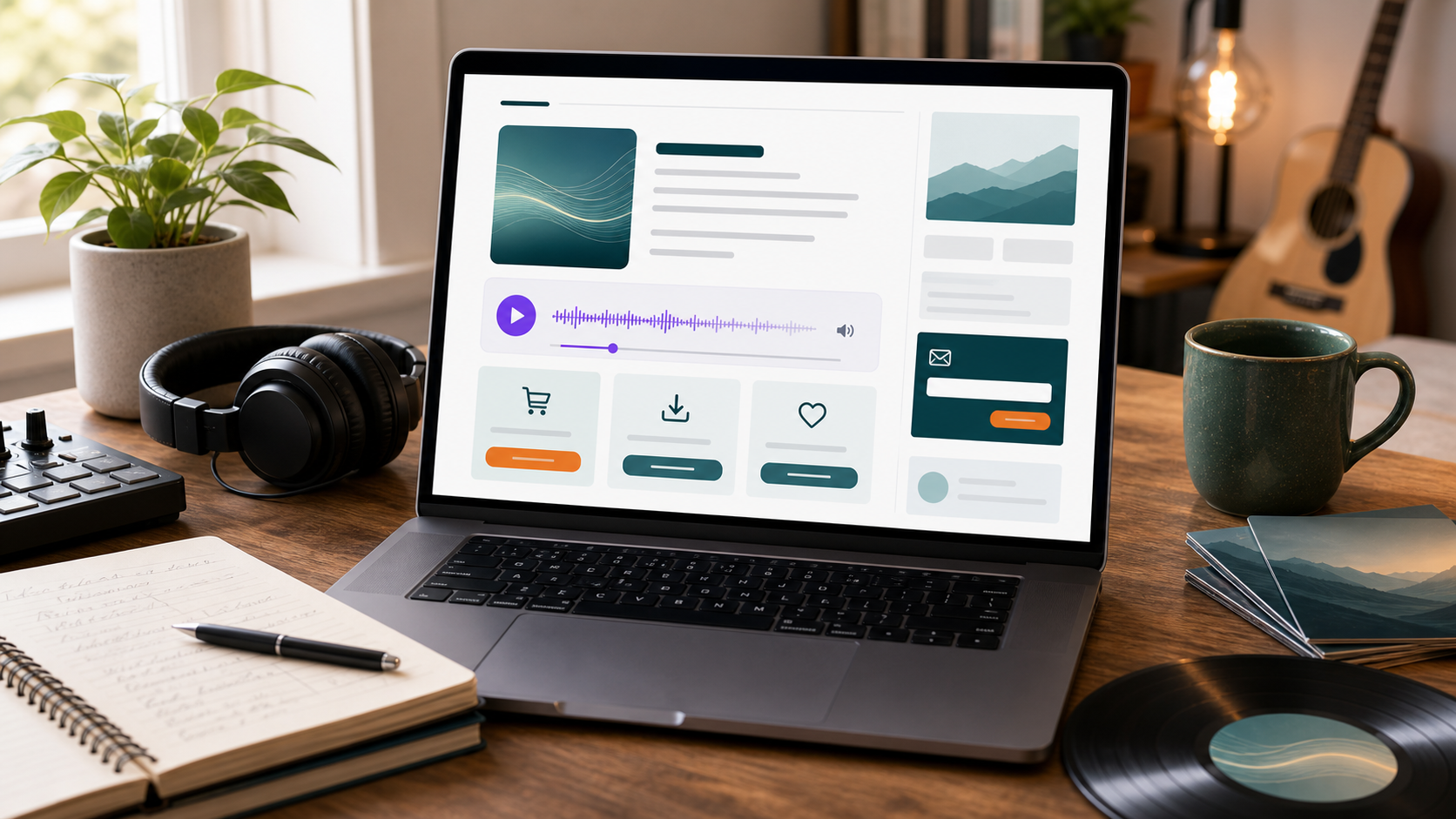
A lot of Suno creators think about sharing first.
Make a song. Copy the link. Send it to someone. Post it somewhere. See what happens.
That is the natural first step.
But once you make a song you actually care about, a different question appears:
Can this become part of a real website, audience, or business?
The short answer is: potentially, yes.
If your Suno account type, the applicable Suno terms, and your planned use allow commercial use of the song, your own website can become a monetization hub around that music. That is very different from only sending people to a third-party platform.
First: Be Careful About Rights
This part matters.
Do not assume every Suno song can be used the same way.
Your rights may depend on your Suno plan, when and how the song was created, Suno’s current terms, and what you want to do with the music.
This article is not legal advice. Before selling downloads, running commercial campaigns, licensing songs, or building a business around Suno music, review Suno’s current terms and make sure your account and usage support what you plan to do.
The safer way to think about it is this: if your rights and Suno plan allow commercial use of a song, your own website gives you more ways to build value around it. Suno’s help center describes commercial use as the ability to earn money from music made while subscribed on a paid plan, while free/basic songs are treated as non-commercial. Check the current Suno help and terms before relying on that for a specific project.
Your Website Can Become the Hub
A song on your own site is not just an audio file or a player.
It can sit inside a larger experience.
A single song page can include:
- the embedded song
- lyrics
- the story behind the track
- cover art
- prompt notes
- related songs
- a buy or download option
- an email signup
- merch links
- membership links
- custom-song or licensing inquiries
That is the difference between a song link and a music business page.
A link sends people somewhere else. A website gives the song context, a path, and a next step.
Ads Are Possible, But Thin Pages Are Not a Strategy
One obvious monetization path is display advertising.
If you have traffic and your site meets the requirements of an ad network such as Google AdSense, a music page could potentially earn ad revenue while people listen, read, and explore.
But this should not be treated as a shortcut.
A thin page with a player and a pile of ads is not a strong long-term strategy. It is not good for users, and it may not be good for platform approval or search performance either.
A better page gives people a reason to be there.
- a behind-the-song article
- lyrics and meaning
- a playlist or artist page
- a creative process breakdown
- a useful prompt or production note
- a story connected to the song
- related tracks and updates
A Suno song can support a monetized page, but the page still needs to be useful. Treat the music as part of a richer experience, not as a shortcut to ad revenue.
Selling Downloads Can Make Sense
If your rights allow it, selling MP3s or bundles from your own site can also make sense.
Not every AI-generated song needs to go through traditional distribution. Some songs may be personal projects, fictional artist releases, demos, meditations, focus tracks, comedy songs, jingles, or soundtrack-style pieces.
A website can support smaller, more direct offers:
- single MP3 downloads
- album bundles
- supporter packs
- instrumental versions
- music for videos or podcasts
- custom song inquiries
- licensing conversations
This is where owned media becomes powerful. You are not relying only on streaming payouts or algorithmic discovery. You are building the page around the value of the song.
Email May Be More Valuable Than the First Sale
One of the biggest advantages of your own website is that it can collect attention over time.
A visitor might not buy the first song they hear. But they might join an email list, follow the project, bookmark the page, or come back when you release more tracks.
That matters because AI music can move quickly.
If you are creating regularly, your site can become an update hub: new songs, new playlists, new lyric notes, new prompt breakdowns, new releases, and new offers.
In that model, the first song is not only a product. It is an entry point.
The Best Monetization Pages Feel Like Music Pages First
The mistake is making the page feel like a cash register with a song attached.
A better approach is to make it feel like a real music page that happens to have a business path.
- lead with the song
- explain why it exists
- make listening easy
- give visitors a related next step
- offer a download or bundle naturally
- collect emails without being pushy
- connect the song to a larger artist or project identity
People are more likely to support something when they understand what it is and why it matters.
Why This Is Different From Only Using Spotify
Spotify and other streaming platforms can be useful, but they are not your website.
On a streaming platform, the listener is inside that platform’s world. The interface, recommendations, next actions, and data belong mostly to the platform.
On your website, you control the surrounding experience.
You can decide what the listener sees before and after the song. You can invite them to subscribe. You can show related songs. You can explain the project. You can offer downloads, merch, services, or memberships.
That does not mean you should avoid streaming platforms. It means your website should be the place where the whole project makes sense.
A Practical Monetization Layout
A simple song monetization page might look like this:
- Song title and short description
- Embedded player
- Lyrics or story behind the song
- Download or buy button if rights allow it
- Email signup
- Related songs or playlist
- Artist/project note
- Clear rights/disclaimer language where appropriate
That is enough to make the page feel intentional without overcomplicating it.
Publishing Public Suno Songs on WordPress
If you use WordPress, IW Player for Suno lets you publish public Suno songs on your own site with a clean embedded player.
The free version is built for a simple public-link workflow. No Suno API key is required for that basic workflow, and no Suno login is required for that basic workflow either.
That can help creators build song pages, artist pages, playlists, portfolios, and project hubs around public Suno songs. If you are planning a larger music section, these guides may help too: how to embed Suno music on WordPress, how to add a Suno player to WordPress, and how to create a Suno artist page on WordPress.
Final Thought
Monetizing Suno music is not only about selling a song.
It is about building the world around the song.
A website gives you room for the music, the story, the offer, the audience, and the next step.
If your rights allow commercial use, your Suno songs can become part of a larger creator business: ads, downloads, memberships, merch, services, licensing, or simply a growing audience that comes back for more.
But the page still has to be worth visiting.
The song gets them interested. The website gives them a reason to stay.

 Island Workflow